Retatrutide (LY3437943): complete guide to the triple agonist

Retatrutide (Eli Lilly development code LY3437943) is the first synthetic peptide to combine agonism at three metabolic hormone receptors: the GLP-1 receptor (GLP-1R), the GIP receptor (GIP-R), and the glucagon receptor (GCGR). This unprecedented triple hormonal action places retatrutide in a brand-new pharmacological class: the metabolic triagonist. Interim results from the TRIUMPH program published in the New England Journal of Medicine (Jastreboff et al., 2023) reported -24.2% body weight loss at 48 weeks, clearly exceeding the -20.9% delivered by tirzepatide over a comparable timeline.
This guide brings together all publicly available data through late 2025 on retatrutide's molecular structure, triple-agonist mechanism, pharmacokinetics, clinical TRIUMPH program (TRIUMPH-1, 2, 3, 4, Obesity, HFpEF, MASH), direct comparisons with semaglutide and tirzepatide, reconstitution protocols for research, and regulatory outlook. All references are intended for research use only (RUO), in vitro and in vivo, in accordance with applicable requirements in France and Europe.
Molecular identity and pharmacochemistry
Retatrutide is a synthetic peptide of 39 amino acids built on the glucagon backbone and engineered to simultaneously engage three G protein-coupled receptors (GPCRs) of the class B1 family: GLP-1R, GIP-R, GCGR. Its development code is LY3437943, its CAS number 2381089-83-2, its monoisotopic molecular mass approximately 4731 Da once acylated, and its molecular formula C221H343N53O67.
The sequence integrates several key modifications: aminoisobutyrate (Aib) at position 2 to protect the peptide from cleavage by dipeptidyl peptidase-4 (DPP-4) at the Xaa-Pro / Xaa-Ala bond; a C20 diacid fatty acid chain grafted through a gamma-glutamate spacer onto an internal lysine; and strategic alpha-methylation across multiple residues to stabilize the alpha helix and extend plasma half-life. The lipid chain enables reversible binding to human serum albumin (HSA) and is the pharmacochemical signature shared by semaglutide, tirzepatide and retatrutide.
Retatrutide's original design is described in Coskun et al. (Cell Metabolism, 2022), who engineered the sequence to finely balance relative activity at each of the three receptors and achieve a superior body-weight profile without impairing glycemic control.
Triple agonist mechanism
Each of the three hormones engaged by retatrutide plays a distinct and complementary metabolic role.
GLP-1R activation stimulates glucose-dependent insulin secretion by pancreatic beta cells, suppresses glucagon secretion by alpha cells, slows gastric emptying, and activates satiety pathways in the hypothalamus (arcuate nucleus) and brainstem (nucleus tractus solitarius). This component is identical to semaglutide's and is the backbone of anorexigenic effects.
GIP-R activation amplifies insulinotropic response to dietary glucose and, as shown by Samms et al. (Nature Metabolism, 2021), remodels adipose tissue metabolism by improving insulin sensitivity and attenuating gastrointestinal side effects associated with GLP-1 alone. This component is shared with tirzepatide.
GCGR activation is retatrutide's true signature. Glucagon receptor agonism increases basal energy expenditure through stimulation of hepatic thermogenesis and fatty-acid turnover, and activates mitochondrial beta-oxidation. This thermogenic effect, added to suppressed food intake, produces a dual caloric deficit (fewer calories in, more calories out) without causing hyperglycemia because simultaneous GLP-1R and GIP-R activation maintains adequate insulin flow.
The relative activity ratio at each receptor has been tuned iteratively. Coskun et al. report a balanced profile with comparable potency at GLP-1R and GIP-R and a deliberately moderated GCGR activity to preserve glycemic tolerance. This engineering of relative potency is the molecule's reason for being: raw triagonism without adjustment would induce iatrogenic hyperglycemia by unlocking glucagon.
Pharmacokinetics and ADME
Retatrutide's C20 lipid chain supports a plasma half-life of approximately 6 days in humans, compatible with once-weekly subcutaneous dosing. After subcutaneous injection, peak plasma concentration (Cmax) is reached at 24 to 72 hours. Absolute subcutaneous bioavailability is estimated above 80%.
Retatrutide binds more than 99% to serum albumin, which protects the molecule from glomerular filtration and proteolysis. Clearance is via general peptide catabolism (non-specific plasma and tissue enzymes) without significant involvement of cytochromes P450, minimizing drug-drug interaction risk. No specific dose adjustment is anticipated in mild-to-moderate hepatic impairment or mild renal impairment, pending ongoing phase III data.
Volume of distribution is low (close to plasma volume), consistent with the profile of an albumin-bound peptide. Central nervous system penetration occurs through circumventricular organs (area postrema, median eminence) and peripherally expressed receptors at barrier borders, consistent with data obtained with semaglutide and tirzepatide.
TRIUMPH clinical program
Eli Lilly is deploying a phase III program for retatrutide called TRIUMPH, comprising multiple parallel trials across different populations.
TRIUMPH-1 (NCT05929066) evaluates retatrutide in adults with obesity (BMI ≥ 30) or overweight with comorbidities, over 76 weeks, versus placebo. This is the pivotal trial for FDA / EMA approval dossier in obesity.
TRIUMPH-2 (NCT05929079) targets adults with obesity and type 2 diabetes, simultaneously evaluating weight loss and glycemic control (HbA1c) versus placebo and, in some arms, versus tirzepatide.
TRIUMPH-3 (NCT05936151) tests retatrutide in patients with obesity and established cardiovascular disease, with composite MACE (major adverse cardiovascular events) endpoints over extended follow-up.
TRIUMPH-4 (NCT05872464) evaluates retatrutide in adolescents with obesity, extending the target population beyond adults.
TRIUMPH-Obesity (phase II, NCT04881760) provided the pioneering evidence base. Interim results published by Jastreboff et al. in the New England Journal of Medicine (2023) reported at 48 weeks, at the 12 mg weekly dose: -24.2% body weight on average (versus -2.1% placebo), with some patients reaching up to -35%. The weight-loss curve had not yet plateaued at 48 weeks, suggesting further loss potential with extended exposure.
TRIUMPH-HFpEF evaluates retatrutide in heart failure with preserved ejection fraction and obesity, an exploratory indication following the trail opened by STEP-HFpEF and SUMMIT (semaglutide, tirzepatide).
TRIUMPH-MASH targets metabolic steatohepatitis (formerly NASH) and evaluates histological resolution and fibrosis regression, an indication of high commercial and scientific potential.
Comparison versus semaglutide and tirzepatide
Three pharmacological generations succeed one another in the GLP-1-based peptide class: mono-agonist (semaglutide), GLP-1/GIP co-agonist (tirzepatide) and GLP-1/GIP/GCGR triple agonist (retatrutide). Each added receptor has delivered incremental weight loss at comparable durations.
At 72 weeks, semaglutide 2.4 mg (STEP-1 trial, Wilding et al., NEJM 2021) delivered -14.9% body weight. At 72 weeks, tirzepatide 15 mg (SURMOUNT-1, Jastreboff et al., NEJM 2022) delivered -20.9%. At 48 weeks, retatrutide 12 mg (phase II, Jastreboff et al., NEJM 2023) delivered -24.2% with a non-plateau trajectory. The progression is clear and monotonic: each additional receptor contributes a cumulative metabolic gain.
On glycemic control, all three molecules reduce HbA1c comparably (-1.5 to -2.0% in diabetic patients). The differentiation plays out on weight loss and thermogenesis: retatrutide is the first molecule in the class to engage a thermogenic mechanism via GCGR, opening a new mechanistic lever absent from semaglutide and tirzepatide.
On tolerability, the digestive side effect profile (nausea, vomiting, diarrhea) is comparable across the three molecules when titration is gradual, with a slight trend toward more digestive effects under retatrutide at higher doses, offset by a slow 16 to 24-week titration.
Biomarkers and scientific readout
Reading retatrutide data relies on several key biomarkers: body weight (primary endpoint), HbA1c (glycemia), waist circumference, body composition by DEXA, blood pressure, liver enzymes (ALT / AST), lipid markers (LDL, HDL, triglycerides), liver fibrosis markers (FIB-4, ELF score). TRIUMPH-MASH additionally uses liver biopsy to measure histological resolution.
For exploratory research, thermogenic parameters specific to retatrutide (resting energy expenditure, respiratory quotient, fatty-acid turnover measured by indirect calorimetry or isotopic tracing) are the mechanistic signature markers distinguishing retatrutide from co-agonists.
Reconstitution protocols (research use only)
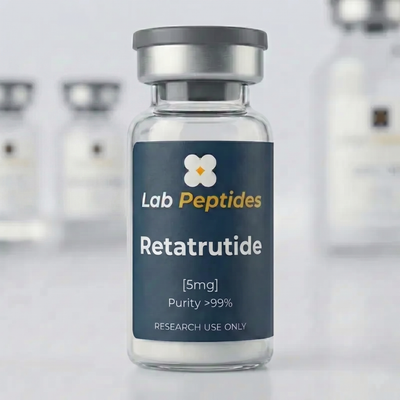
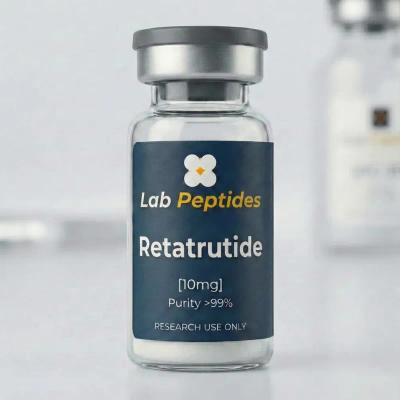
Lyophilized retatrutide is typically reconstituted with bacteriostatic water (0.9% benzyl alcohol) to yield a stable solution. For a 10 mg vial, standard reconstitution in 1 ml of bacteriostatic water gives a 10 mg/ml concentration (i.e. 0.2 ml = 2 mg). Volume flexibility allows adjusting concentration to 5 mg/ml (2 ml) or 2.5 mg/ml (4 ml) depending on the experimental design.
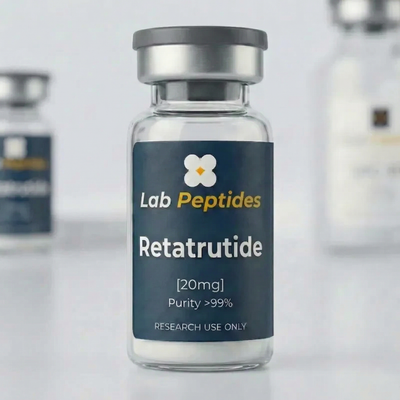
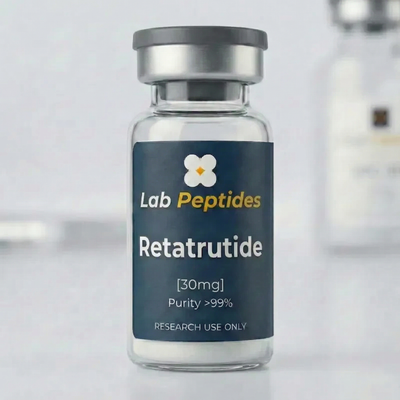
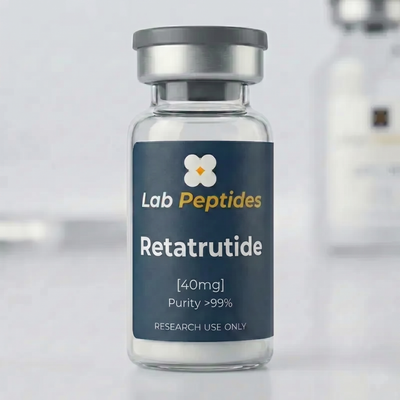
The 5 mg, 15 mg, 20 mg, 30 mg and 40 mg vials follow the same dilution logic. Critical research parameters are: reconstitution temperature (ideally 2-8 °C), slow injection against the vial wall to avoid shear denaturation, gentle swirling (no aggressive vortex), and complete homogenization before sampling.
Stability, storage and interferences
In lyophilized state, retatrutide stores for several years at -20 °C protected from light and moisture. Once reconstituted in bacteriostatic water, documented stability is 28 days at 2-8 °C for peptides of this class, subject to aseptic handling. Major degradation pathways to monitor are methionine and tryptophan oxidation, glutamine deamidation, and peptide bond hydrolysis in acidic or basic media.
Compatibility with common buffers (PBS, Tris, HEPES) is preserved. Avoid ionic detergent solutions, which may unfold the alpha helix and degrade albumin binding.
Clinical and regulatory outlook
FDA filing for obesity is expected in 2026, after full readout of TRIUMPH-1 and TRIUMPH-2. The EMA will follow. Exploratory indications (MASH, HFpEF, pediatric) could generate label extensions across 2027-2029. Retatrutide's market entry will mark the opening of the third generation of incretinomimetics and challenge the established commercial hierarchy between semaglutide (Ozempic / Wegovy) and tirzepatide (Mounjaro / Zepbound).
On the basic research front, retatrutide will serve as a pharmacological probe to explore the integrated GLP-1 / GIP / glucagon biology and will fuel a new generation of multi-agonists with even greater selectivity (potential addition of amylin via cagrilintide, PYY, FGF-21).
Conclusion
Retatrutide represents the current peak of peptide engineering applied to energy metabolism. A balanced triple agonist, a weekly half-life, and non-plateau weight loss at 48 weeks: every marker of a breakthrough advance is present. The next 18 months will deliver the pivotal data that will condition approval and redefine the metabolic research standard.
Origins and pharmacological heritage
Retatrutide did not emerge from nowhere. It belongs to a twenty-year research lineage on gut hormone receptor agonists. The proof of concept of triagonism dates back to oxyntomodulin, a natural 37-amino acid peptide produced by proglucagon cleavage in intestinal L-cells, which simultaneously activates GLP-1R and GCGR and drives marked weight loss in rodents (Cohen et al., 2003). Day et al. (Nature Chemical Biology, 2009) delivered the first balanced synthetic triple agonist in rodents, demonstrating that a single molecule could outperform each mono-agonist in weight efficacy without sacrificing glycemic control.
The Eli Lilly platform, responsible for dulaglutide (GLP-1R), tirzepatide (GLP-1R / GIP-R) and now retatrutide, has capitalized on expertise in acylation chemistry, Aib engineering, and albumin binding. Coskun et al. (Cell Metabolism, 2022) published the in vitro and in vivo characterization of LY3437943: sub-nanomolar EC50 potency at all three human receptors, -20% weight loss in obese rats at 4 weeks, and absence of hyperglycemia despite GCGR activation. This publication is the reference document for any fundamental research on the molecule.
Intracellular signaling and functional bias
The three target receptors (GLP-1R, GIP-R, GCGR) belong to GPCR class B1 coupled primarily to the Gs protein (adenylate cyclase activation -> cyclic AMP -> PKA). All three also recruit beta-arrestin following C-terminal phosphorylation by GRKs (G protein-coupled receptor kinases), leading to receptor internalization and desensitization. Signal quality depends on the Gs / beta-arrestin activation ratio specific to each agonist, a phenomenon called functional bias or biased agonism.
Retatrutide exhibits a modulated Gs bias at GIP-R, which limits internalization and prolongs surface signaling, a feature shared with tirzepatide and distinct from the natural GIP agonist. At GCGR, the bias is more finely tuned to avoid rapid desensitization, a necessary condition for sustained thermogenic effect. Complete mapping of retatrutide's bias profiles remains an active field of basic research and conditions the design of next-generation multi-agonists.
Cardiovascular safety and signals to monitor
GLP-1 agonism is associated with a modest increase in resting heart rate (+2 to +5 beats per minute), an effect reproduced with retatrutide. The TRIUMPH-3 program assesses long-term cardiovascular impact through MACE endpoints. Exploratory research signals to monitor include: heart rate variability, PR interval prolongation, blood pressure (generally reduced under GLP-1-based therapies through weight loss), and sympatho-vagal autonomic balance.
GCGR agonism has historically raised concerns (hyperglycemia, excessive catabolism), all mitigated by retatrutide's relative activity trade-off. Specific markers to monitor: fasting glycemia, HbA1c, cortisol, cortisol / DHEA ratio, nitrogen balance, and body composition (preserved lean mass vs reduced fat mass, ratio visualized by DEXA).
Positioning in the peptide research ecosystem
Retatrutide does not exhaust the multi-agonist research trajectory. Exploratory combinations at preclinical or clinical stages include: retatrutide + cagrilintide (adding amylin agonism for a quadruple metabolic effect), retatrutide + PYY 3-36 (added intestinal satiety), retatrutide + FGF-21 (hepato-specific, anti-steatosis). Cagrilintide, a long-acting amylin analog, is the most advanced candidate for combination: the REDEFINE trial is already evaluating cagrilintide + semaglutide (CagriSema), and a cagrilintide + retatrutide combination represents the logical horizon.
On the basic research side, retatrutide serves as a reference for studying GLP-1 / GIP / glucagon dialogue across models: primary hepatocyte (lipid metabolism), brown adipocyte (thermogenesis), hypothalamic neuron (satiety), pancreatic beta cell (insulinotropy).
Order your retatrutide: 6 formats from 5 to 40 mg, HPLC ≥98%, stock in France, dispatched Monday to Saturday.